








How do you select the right replacement tires for a Jeep?
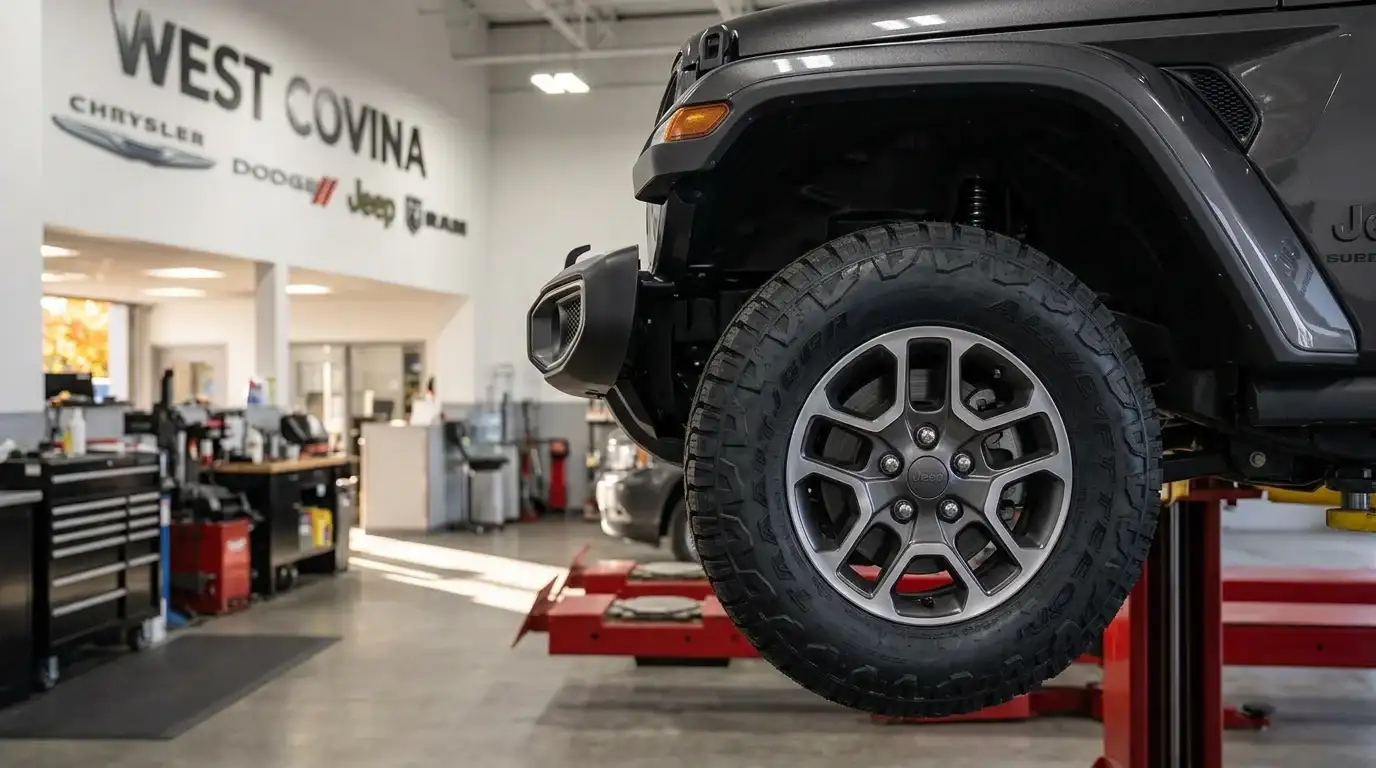
Selecting replacement tires for a Jeep requires matching the tire size to the factory wheel dimensions or lift height, choosing a tread type based on pavement versus off-road usage, and selecting the correct load rating to balance towing stability with on-road ride comfort. Confirming these specifications against the driver-door placard ensures adequate wheel well clearance, safety, and proper drivetrain performance.
When evaluating replacement options, drivers must consider daily driving habits. For commuters traveling through commercial corridors in City of Industry via the 60 freeway, an all-season or mild all-terrain tread provides low rolling resistance, long tread life, and minimal cabin noise during high-speed highway travel. Conversely, drivers who routinely head off the pavement require deeper tread voids and reinforced sidewalls to prevent pinch-punctures from sharp rocks.
Matching the proper wheel diameter and offset is equally critical. Factory wheel widths are engineered to support specific tire section widths; mounting an overly wide tire on a narrow factory rim can cause uneven center tread wear and compromised bead seating. At West Covina Chrysler Dodge Jeep Ram, our service team assists owners with selecting tires that match original manufacturer specifications. You can explore genuine Mopar replacement tires and factory-approved accessories through our parts counter, get turn-by-turn directions to our West Covina service department, or speak directly with an advisor by giving us a quick call at (626) 746-3132.
Table of Contents
- What tire sizes come standard on Jeep Wrangler and Gladiator trims?
- What is the difference between All-Terrain and Mud-Terrain tires for a Jeep?
- What do Load Ranges C, D, and E mean for Jeep ride quality and capability?
- How does the BFGoodrich KO2 compare to the Falken Wildpeak A/T3W on a Jeep?
- Why is a 4-wheel alignment and speedometer calibration required after installing larger tires?
- Common Questions About Jeep Tire Selection and Maintenance
- Schedule Your Jeep Tire Maintenance at West Covina Chrysler Dodge Jeep Ram | Pinnacle Auto Group
What tire sizes come standard on Jeep Wrangler and Gladiator trims?
Standard Jeep Wrangler and Gladiator models feature factory tire sizes ranging from 245/75R17 (about 32 inches) on entry trims up to 315/70R17 (35 inches) on factory-equipped high-capability packages. Selecting replacement tires that match or safely expand upon these trim-specific sizes preserves engineered suspension articulation and odometer accuracy.
Factory trim configurations break down across specific wheel and tire fitments:
- Sport and Sport S: Standard fitment utilizes 245/75R17 tires mounted on 17-inch steel or aluminum wheels, offering a lightweight setup optimized for highway efficiency and daily maneuverability.
- Sahara: Standard configurations feature 255/70R18 tires on 18-inch wheels, providing a balanced contact patch tuned for smooth highway cruising and quiet cabin comfort.
- Rubicon and Willys: Equipped with 285/70R17 (33-inch) all-terrain or mud-terrain tires paired with high-clearance fender flares and off-road suspension tuning.
- Xtreme Recon Package: Features factory 315/70R17 (35-inch) tires mounted on beadlock-capable wheels, paired with lower axle ratios to handle the increased rotational mass.
For SUV models like the Jeep Grand Cherokee, factory fitments include 245/70R17 on Laredo trims, 265/60R18 on Limited and Trailhawk configurations, 265/50R20 on Summit trims, and 275/45R21 on High Altitude editions.
Our service department regularly sees owners bringing in vehicles to verify whether 33-inch or 35-inch tire upgrades require modified bump stops or wheel spacers before mounting. Drivers looking to inspect factory tire wear or upgrade tread patterns can schedule an inspection through our online service scheduler to ensure proper fitment.
What is the difference between All-Terrain and Mud-Terrain tires for a Jeep?
All-terrain tires utilize interlocking tread blocks and dense siping for quiet performance on dry pavement, wet freeways, and light dirt trails, whereas mud-terrain tires feature wide void ratios, aggressive shoulder lugs, and multi-ply sidewalls engineered for deep mud, loose gravel, and severe off-road terrain.
All-Terrain (A/T) tires represent the most versatile choice for daily-driven 4×4 vehicles. The closely spaced tread lugs maximize rubber contact with the asphalt, delivering predictable cornering stability and shorter braking distances in wet weather. Modern A/T compounds also incorporate full-depth sipes that slice through standing water on California highways, providing wet grip while resisting hydroplaning. Tread warranties on premium all-terrain tires typically range from 50,000 to 60,000 miles.
Mud-Terrain (M/T) tires prioritize off-road traction over street refinement. The deep, open tread channels are designed to self-clean by sloughing off packed mud and debris as the wheel rotates. High-void shoulder blocks extend down the tire sidewall to supply clawing traction when climbing out of deep ruts or scrambling over loose rocks.
The tradeoff for mud-terrain performance lands squarely on highway comfort and fuel economy. Mud-terrain tires feature higher rolling resistance and added weight, which typically reduces fuel economy by 1 to 3 mpg compared to standard highway or mild all-terrain alternatives. The open tread voids also trap air at speed, producing a noticeable low-frequency cabin hum on the highway.
Jeep owners heading toward mountain trailheads near Claremont benefit from all-terrain options that maintain wet traction during wet weather commutes while supplying reinforced sidewalls for gravel roads and mountain recreation areas.
What do Load Ranges C, D, and E mean for Jeep ride quality and capability?
Load range ratings designate a tire’s maximum weight-carrying capacity and inflation pressure limits, where Load Range C provides a flexible 6-ply equivalent carcass rated up to 50 psi for smooth ride comfort, and Load Range E features a rigid 10-ply equivalent structure rated up to 80 psi engineered for maximum payload capacity and sidewall puncture defense.
Understanding how load ratings affect vehicle performance helps owners choose the right construction for their driving demands:
- Load Range C (6-ply rating): Engineered specifically for light-to-midsize SUVs and two-door 4×4 vehicles. The pliable sidewalls flex over small road imperfections, expansion joints, and pot holes, preserving factory ride quality and allowing the suspension to absorb impacts naturally. It operates typically at 35 to 50 psi.
- Load Range D (8-ply rating): Offers a middle ground for four-door Wranglers and Gladiator trucks carrying heavy accessories like steel bumpers, winches, or roof tents. It increases payload stability without creating an excessively harsh unladen ride.
- Load Range E (10-ply rating): Built with heavy-duty internal belting meant for full-size work trucks like the RAM 1500 or heavy commercial hauling. While Load Range E provides extreme puncture resistance against sharp trail rocks, the ultra-stiff sidewalls transmit significant road vibration and harshness into the cabin when installed on lighter Jeep models.
Selecting an overly stiff load range can lead to harsh ride complaints and reduced mechanical traction on washboard roads, as the rigid tire carcass resists conforming to ground contours. Matching the tire’s ply rating to the actual operating weight of the vehicle maintains proper tire deformation and tread contact.
| Load Range | Ply Equivalent | Max Inflation Pressure | Primary Benefit | Ideal Vehicle Application |
|---|---|---|---|---|
| Load Range C | 6-Ply | Up to 50 PSI | Smooth ride comfort & road impact absorption | Standard 2-Door & 4-Door Jeep Wranglers |
| Load Range D | 8-Ply | Up to 65 PSI | Balanced payload support & puncture resistance | Loaded Wrangler Unlimited & Gladiator Trucks |
| Load Range E | 10-Ply | Up to 80 PSI | Maximum sidewall toughness & heavy towing | Heavy-Duty Towing & Extreme Rock Crawling |
How does the BFGoodrich KO2 compare to the Falken Wildpeak A/T3W on a Jeep?
The BFGoodrich All-Terrain T/A KO2 focuses on rugged off-road sidewall protection and rock-crawling durability through its CoreGard technology, whereas the Falken Wildpeak A/T3W provides superior wet-pavement braking, deeper starting tread depth, and outer apex heat diffusers engineered for heavy highway towing.
The BFGoodrich KO2 features extended shoulder rubber and thick sidewall lugs designed to deflect sharp hazards on technical trails. Its interlocking tread design distributes surface pressure evenly, preventing premature wear during off-road air-down conditions. The KO2 holds the 3PMSF (Three-Peak Mountain Snowflake) severe snow rating and remains an industry standard for mixed-surface rock and sand traction. For common sizes like 265/70R17, retail costs generally range between $290 and $310 per tire.
The Falken Wildpeak A/T3W stands out for wet road grip and heat management. Falken incorporates secondary heat diffusers in the lower sidewall to keep internal tire temperatures stable when towing heavy trailers or driving at sustained freeway speeds. The tread pattern features deep tread blocks out of the box, offering long tread life and consistent hydroplaning resistance throughout the tire’s lifecycle. In popular 265/70R17 sizes, retail pricing typically lands between $250 and $270 per tire.
Comparing key characteristics of these two all-terrain choices:
- Wet Highway Traction: Falken Wildpeak A/T3W holds an advantage due to specialized silica compounds and full-depth siping.
- Rock & Sidewall Protection: BFGoodrich KO2 leads with bruised-rubber sidewall defense and race-proven tread toughness.
- Tread Depth & Value: Falken provides deeper initial tread voids and lower replacement pricing per tire.
- Winter Performance: Both tires feature the 3PMSF rating, confirming tested traction on packed snow and icy roads.
Why is a 4-wheel alignment and speedometer calibration required after installing larger tires?
Installing larger diameter tires increases rolling circumference, which causes the speedometer to display lower-than-actual vehicle speeds and alters front suspension steering geometry, requiring a precision 4-wheel alignment and engine control module (ECM) recalibration to maintain proper transmission shift timing, electronic stability control, and uniform tread wear.
When tire diameter changes, the vehicle’s mechanical drivetrain parameters shift:
- Speedometer Accuracy: Because a larger tire completes fewer revolutions per mile, an uncalibrated vehicle traveling at an actual 65 mph may show only 60 mph on the speedometer.
- Transmission Shift Points: Modern transmissions, such as the TorqueFlite® 8-speed automatic, rely on vehicle speed sensors to execute smooth gear changes. Larger tires trick the ECM into upshifting too early, causing lugging or sluggish engine response from the 3.6L Pentastar® V6 or 2.0L turbocharged 4-cylinder engine.
- Electronic Stability Control: Systems like ABS and traction control compute wheel speed differences to detect slides. Incorrect tire height parameters can trigger false ABS activation during normal cornering.
Suspension geometry is equally sensitive to tire size and wheel offset adjustments. Increasing tire height raises the axle center line, altering caster and toe angles. Improper toe settings cause rapid scrub wear along the tread edges, while incorrect caster can induce steering instability over freeway bumps.
Performing a 4-wheel alignment on computerized alignment racks restores factory alignment tolerances. Simultaneously, flashing the ECM with updated tire height settings recalibrates the speed sensor data, restoring factory shift schedules and speedometer calibration.
For complete tire mounting, dynamic balancing, and alignment services, visit our dealership location or contact our certified technicians directly by dialing (626) 746-3132.
Common Questions About Jeep Tire Selection and Maintenance
Q: What is the largest tire size you can fit on a stock Jeep Wrangler without a lift kit?
Jeep Wrangler and Gladiator owners often upgrade to 33-inch tires like the 285/70R17 without needing suspension lifts or worrying about tire rub during everyday driving. Rubicon models equipped with factory high-clearance fender flares can accommodate 35-inch tires (315/70R17) on factory wheels, though full off-road suspension articulation with disconnected sway bars may require extended bump stops to prevent inner fender liner contact during heavy flexing.
Q: How much fuel economy do you lose when switching to aggressive off-road tires?
Transitioning from street-focused all-season tires to heavy mud-terrain tires typically reduces fuel economy by 1 to 3 mpg. This decrease results from added unsprung weight and high rolling resistance caused by wide tread voids. Maintaining correct cold inflation pressure and recalibrating the vehicle computer to correct transmission shift points helps minimize mileage losses during daily driving.
Q: How often should you rotate off-road tires on a 4×4 Jeep?
Off-road and all-terrain tires should be rotated every 5,000 miles or at every engine oil change. Performing a 5-tire rotation that incorporates the matching full-size spare tire extends overall tread life by 20 percent. Regular rotations prevent uneven heel-and-toe tread wear patterns that naturally develop on aggressive tread blocks mounted to solid front axles.
Q: What is the benefit of the Three-Peak Mountain Snowflake (3PMSF) rating on all-terrain tires?
The 3PMSF rating branded on tire sidewalls indicates that the rubber compound and tread siping meet strict severe snow traction standards required by the U.S. Department of Transportation. Unlike basic Mud and Snow (M+S) designations, 3PMSF certified tires stay pliable in freezing weather, providing tested grip on snow and icy mountain pass roads.
Q: What causes steering wheel shimmy after installing larger off-road tires?
Steering wheel shimmy after tire installation is usually caused by dynamic wheel imbalance or incorrect front toe alignment. Heavy off-road tires demand precision road-force balancing to eliminate weight discrepancies across large tread blocks. Verifying front suspension torque values and tie-rod alignment ensures the steering linkage remains stable at highway speeds.
Schedule Your Jeep Tire Maintenance at West Covina Chrysler Dodge Jeep Ram | Pinnacle Auto Group
Maintaining optimal tire condition directly impacts the safety, capability, and fuel efficiency of your vehicle. From factory-spec replacement tires to dynamic road-force balancing, computerized 4-wheel alignments, and speedometer recalibrations, factory-trained service technicians ensure your Jeep operates according to exact original equipment standards.
Regular tire rotations, pressure checks, and tread depth inspections prolong tread life while protecting sensitive 4×4 transfer cases and axle differentials from unequal tire circumference wear. Whether you need all-season tires for daily commuting or heavy-duty all-terrain upgrades for weekend trail adventures, using Mopar-approved tire fitments guarantees uncompromised reliability.
Protect your investment and preserve legendary Jeep performance on every journey. Schedule your next tire service appointment online, order genuine parts through our tire center, or visit West Covina Chrysler Dodge Jeep Ram | Pinnacle Auto Group for expert care and professional maintenance.
Summary of Fitments & Specifications
- Factory Sizes: 245/75R17 (Sport), 255/70R18 (Sahara), 285/70R17 (Rubicon), 315/70R17 (Xtreme Recon)
- Tread Choices: All-Terrain (quiet highway, 50k-60k mile life) vs. Mud-Terrain (maximum trail grip, 1-3 mpg trade-off)
- Load Range Guide: Load Range C (pliable 6-ply, smooth ride) vs. Load Range E (stiff 10-ply, heavy towing & rock protection)
- Alignment Need: Required after tire height changes to adjust caster/toe and prevent irregular tread wear
© 2026 West Covina Chrysler Dodge Jeep Ram | Pinnacle Auto Group. All rights reserved.
0 comment(s) so far on How do you select the right replacement tires for a Jeep?