







Maintaining Jeep SUV and Gladiator Pickup Truck Stopping Power
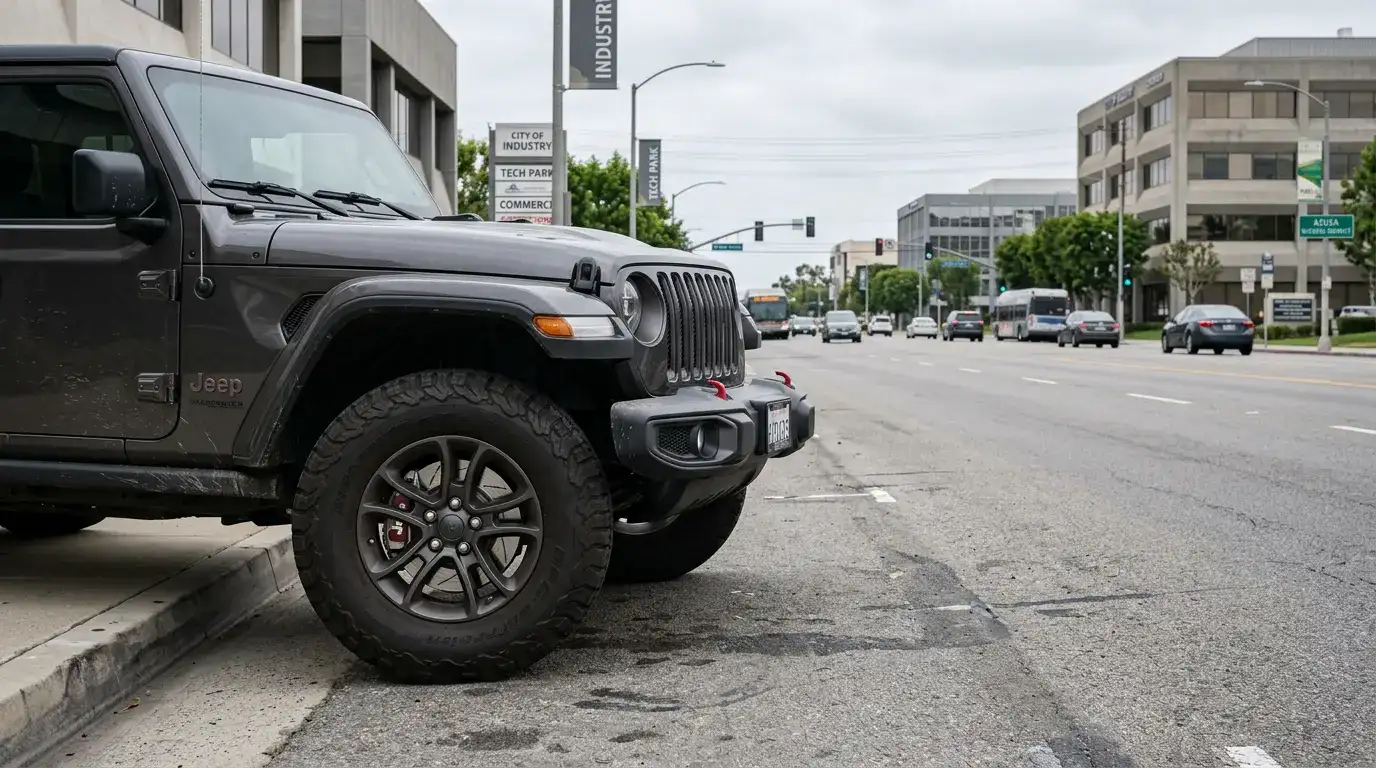
Heavy commuter traffic and regular stop-and-go driving on Southern California freeways place a massive amount of stress on your vehicle’s braking components. When you are navigating daily routes through the busy commercial corridors of City Of Industry, your brakes work constantly to keep you safe amid dense logistics and transport traffic. This repetitive, moderate-to-heavy braking generates extreme thermal energy within the braking system. According to testing by the National Highway Traffic Safety Administration (NHTSA), elevated operating temperatures can significantly lower the friction coefficient of your brake pads, which directly increases your vehicle’s overall stopping distance.
To combat this heat-induced wear and preserve the legendary performance of your vehicle, regular maintenance is absolutely essential. Jeep recommends having your complete braking system inspected at least every 10,000 miles or during every routine oil change. For drivers operating in heavy suburban traffic, scheduling these regular checkups ensures that minor component wear is identified before it develops into an expensive or hazardous mechanical failure. Staying proactive with professional inspections is the most effective way to protect your vehicle’s durability and keep your stopping power consistent.
If you suspect your vehicle requires immediate attention or you are approaching your next maintenance interval, you can reach our service team by giving us a quick call to speak with an advisor. For those ready to bring their vehicle in for an inspection, dropping by our West Covina service center puts you in touch with factory-trained technicians who specialize in keeping your vehicle running safely.
Table of Contents
- What Are the Warning Signs That Your Jeep Brakes Need to Be Replaced?
- How Often Should Jeep Brake Fluid Be Flushed to Prevent Hydraulic Fade?
- What Is Included in a Standard Jeep Brake Service at Our West Covina Shop?
- Dealership Service vs Independent Shops for Your 2026 Jeep
- Do Aftermarket Brake Pads Void Your 2026 Jeep Factory Warranty?
- The Risks of Performing DIY Brake Work on Modern Jeep Systems
- Common Questions About Maintaining Your Jeep Braking System
What Are the Warning Signs That Your Jeep Brakes Need to Be Replaced?
How do you know when your vehicle’s braking system is starting to lose its structural integrity? Your vehicle is engineered with built-in physical indicators designed to alert you well before a critical failure occurs. The most common signal is a high-pitched squealing or squeaking sound when you press the brake pedal. This noise is typically caused by a small metal wear indicator built into the brake pad, which is designed to make contact with the rotor once the friction material wears down to a specific level. If you ignore this sound, it will eventually transition into a harsh, metallic grinding noise, indicating that the friction material is completely gone and the metal backing plate is damaging the rotor.
Other critical symptoms of brake wear include a soft or spongy feeling when you press the brake pedal, the vehicle pulling to one side while slowing down, or a noticeable pulsation through the pedal or steering wheel. For late-model vehicles like the 2026 Jeep Grand Wagoneer or the 2026 Jeep Wrangler, manufacturer specifications state that front and rear brake pads should be replaced when the remaining friction material measures approximately 3 mm (roughly 1/8 inch) in thickness. Operating your vehicle below this threshold can lead to severe rotor damage, reduced stopping power, and compromised safety.
When you notice any of these warning signs, it is vital to address them immediately with high-quality components. You can find exact replacements designed for your vehicle’s specifications through our department for genuine Mopar parts. To have our certified technicians perform a precise diagnostic check and replacement, simply use our online service scheduling tool to reserve a time that fits your busy calendar.
How Often Should Jeep Brake Fluid Be Flushed to Prevent Hydraulic Fade?
Brake fluid is the lifeblood of your vehicle’s hydraulic braking system, translating the physical pressure of your foot on the pedal into the mechanical force that stops your wheels. Over time, this fluid naturally degrades and absorbs moisture from the surrounding atmosphere, even in relatively mild Southern California climates. Jeep specifications dictate that brake fluid must be completely flushed and replaced every 2 years, regardless of how many miles you have driven. This strict time-based interval is critical because brake fluid is hygroscopic, meaning it actively attracts and retains water molecules.
When moisture content in the fluid rises, it significantly lowers the fluid’s boiling point. Under heavy braking conditions—such as descending steep mountain roads or navigating the hilly terrain surrounding Claremont—the heat generated by your brake pads transfers into the calipers and boils the water contaminated fluid. This creates vapor pockets within the hydraulic lines. Because vapor compresses much easier than liquid, you will experience a sudden, dangerous loss of pedal pressure known as brake fade, where the pedal feels soft and fails to stop the vehicle effectively.
Regularly flushing the hydraulic system removes contaminated fluid, moisture, and tiny metal particles that naturally shed from internal components. This simple preventative service protects the internal seals of your master cylinder and ABS valves from premature corrosion. Keeping clean fluid in the system ensures that your hydraulic pressure remains consistent, providing reliable, firm pedal response when you need it most.
What Is Included in a Standard Jeep Brake Service at Our West Covina Shop?
When you bring your vehicle to a professional facility for brake maintenance, a comprehensive multi-point inspection is performed to ensure every component of the hydraulic and mechanical system meets strict manufacturer standards. Technicians begin by lifting the vehicle to conduct a detailed visual and physical measurement of the brake pads and rotors. They measure the exact thickness of the friction material on all four wheels to verify they are well above the critical wear limits.
A standard service includes the following vital procedures:
- Measuring rotor thickness and checking for surface scoring, hot spots, or heat cracks
- Inspecting the brake calipers, slide pins, and rubber boots for proper lubrication and movement
- Testing the brake fluid for moisture content, copper contamination, and proper level
- Checking all flexible brake lines and rigid steel hoses for signs of cracking, dry rot, or leaks
- Inspecting the electronic parking brake system and resetting calibration parameters on modern models
If the brake pads are worn close to or below the 3 mm limit, technicians will install new pads and evaluate the condition of the brake rotors. According to official Mopar guidelines, brake rotors are engineered with a specific minimum thickness cast directly onto the rotor hat. If a rotor is worn down or requires machining that would reduce its thickness below this safety limit, it must be replaced rather than resurfaced. This ensures the vehicle continues to meet Federal Motor Vehicle Safety Standards (FMVSS) for stopping distance and thermal dissipation.
Dealership Service vs Independent Shops for Your 2026 Jeep
Choosing where to service your modern vehicle can have a significant impact on its long-term reliability and performance. While independent repair shops often highlight lower labor rates, they frequently rely on generic, one-size-fits-all aftermarket parts to keep costs down. These universal components are designed to fit a wide variety of makes and models, meaning they may not match the exact metallurgy, weight, or friction characteristics required for your vehicle’s specific weight and braking system.
Our dealership service center utilizes factory-trained technicians who work exclusively on Chrysler, Dodge, RAM, and Jeep vehicles. These specialists have direct access to official factory technical service bulletins, specialized diagnostic computers, and model-specific tools that independent shops simply do not possess. For example, servicing the electronic parking brake or the advanced brake-assist sensors on a 2026 Jeep Grand Cherokee requires proprietary software to properly calibrate the system after a pad replacement.
Furthermore, our team installs original equipment manufacturer (OEM) Mopar components that are engineered specifically for your vehicle’s weight and performance dynamics. These parts are constructed from advanced composite materials that resist heat fade and minimize brake dust, ensuring your vehicle retains the exact stopping power, quiet operation, and safety performance it had when it first rolled off the assembly line.
Do Aftermarket Brake Pads Void Your 2026 Jeep Factory Warranty?
A common point of confusion for many vehicle owners is whether using non-OEM parts will void their manufacturer warranty coverage. Under federal law, specifically the Magnuson-Moss Warranty Act, a manufacturer cannot legally void your entire vehicle warranty simply because you installed an aftermarket part. This means that putting aftermarket brake pads on your vehicle will not automatically cancel your powertrain or bumper-to-bumper warranty.
However, there is an important caveat to keep in mind regarding subsequent component failures. If an aftermarket brake pad fits poorly, generates excessive heat, or fails structurally, any resulting damage to other parts of your vehicle will not be covered under the factory warranty. For instance, if an aftermarket pad causes premature cracking in an OEM rotor, or if its incorrect installation damages a caliper piston, you will be responsible for the full cost of those repairs.
To maintain total peace of mind and ensure your factory warranty claims remain completely undisputed, utilizing OEM parts installed by certified technicians is always the safest path. This guarantees that every component of your braking system is fully backed by manufacturer-approved protection and designed to work in perfect harmony with your vehicle’s safety systems.
The Risks of Performing DIY Brake Work on Modern Jeep Systems
Attempting to replace your own brake components on a modern vehicle carries substantial safety and financial risks that go far beyond simple mechanical assembly. Today’s braking systems are highly integrated with electronic safety features, including Electronic Stability Control, Traction Control, and advanced collision-avoidance systems. Performing a basic pad swap without the proper electronic diagnostic tools can easily damage delicate wheel speed sensors or misalign the electronic calipers, leading to system faults and deactivated safety features.
Some of the most common risks associated with DIY brake maintenance include:
- Damaging the internal seals of electronic parking brake calipers by forcing them back manually without putting the system into service mode
- Failing to properly bleed the hydraulic lines, leaving air pockets that cause a dangerously soft pedal and increased stopping distances
- Reusing worn hardware clips or failing to apply proper high-temperature lubricant to caliper slide pins, resulting in uneven pad wear and constant squealing
- Stripping caliper mounting bolts or failing to torque them to exact factory specifications, which can lead to a caliper loosening while driving
Given that your brakes are the single most critical safety feature on your vehicle, mistakes made during a home repair can have catastrophic consequences. Entrusting this vital maintenance to certified professionals ensures that every bolt is torqued to spec, every electronic system is properly calibrated, and your vehicle is thoroughly road-tested to guarantee maximum stopping power before it returns to the road.
Common Questions About Maintaining Your Jeep Braking System
Q: How long do brake pads typically last on a Jeep?
A: On average, brake pads last between 30,000 and 70,000 miles depending on your driving habits and environment. If you frequently tow heavy trailers or spend a lot of time in stop-and-go urban traffic, your pads will wear down much faster, closer to the lower end of that range. Conversely, conservative highway driving can extend their lifespan significantly.
Q: Why does my Jeep make a grinding noise when I apply the brakes?
A: A grinding noise indicates that your brake pads have worn down completely, leaving no friction material. This causes the metal backing plate of the pad to grind directly against the metal rotor, which severely compromises your stopping ability and ruins the rotor surface. If you hear this sound, you should park the vehicle immediately and have it serviced.
Q: Does the 2026 Jeep Grand Cherokee require special procedures for a brake service?
A: Yes, the 2026 Jeep Grand Cherokee is equipped with an electronic parking brake system that must be placed into a specific “Service Mode” via the vehicle’s dashboard menu or a diagnostic scan tool before any rear brake work is performed. Forcing the caliper pistons back without activating this mode can permanently damage the electric caliper motors.
Q: Can I just replace the brake pads and keep my old rotors?
A: You can only reuse your existing rotors if they are still above the minimum safety thickness specified by the manufacturer and are completely free of deep grooves, warping, or heat cracks. Our technicians always measure your rotors with a micrometer during a brake service to determine if they can be safely machined or if they must be replaced.
Q: What should I do if my brake warning light comes on?
A: If your brake warning light illuminates on the dashboard, it could indicate low brake fluid levels, a hydraulic pressure loss, or an issue with the anti-lock braking system. You should have the vehicle inspected by a professional immediately to identify the source of the warning and ensure your vehicle remains safe to drive.
If you are experiencing any of these issues or have further questions about your vehicle’s maintenance, please contact our professional service team at (626) 746-3132. For prompt, expert care using genuine manufacturer components, you can also get directions to our West Covina service center and bring your vehicle in for a complete inspection today.
© 2026 West Covina Chrysler Dodge Jeep Ram | Pinnacle Auto Group. All rights reserved.

0 comment(s) so far on Maintaining Jeep SUV and Gladiator Pickup Truck Stopping Power