







Where is certified 2026 Dodge brake repair available in West Covina?
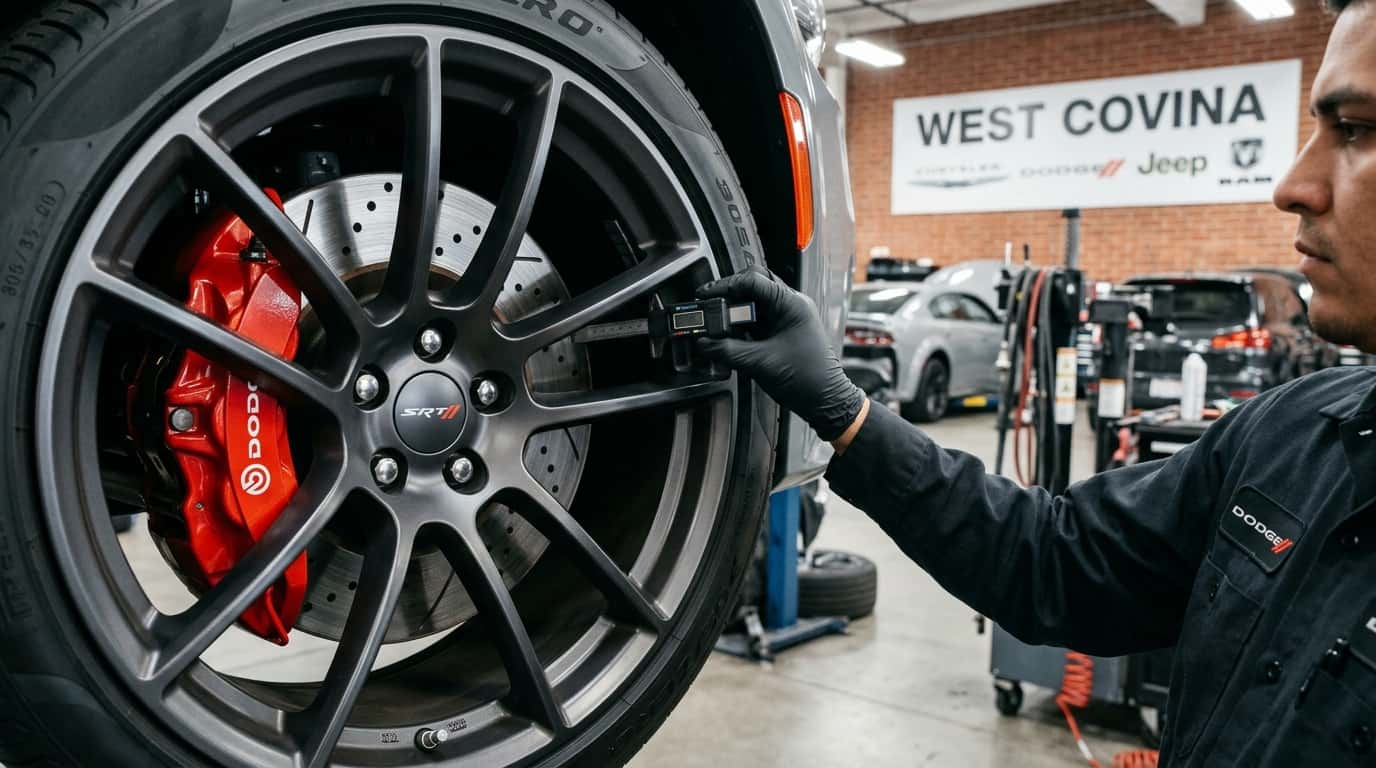
Certified 2026 Dodge brake repair in West Covina is available at West Covina Chrysler Dodge Jeep Ram, located at 298 N Azusa Ave, West Covina, CA 91791. Our factory-trained service center provides comprehensive brake system care, including OEM pad replacements, rotor resurfacing, brake fluid flushes, and full multi-point safety inspections using genuine Mopar components engineered specifically for Dodge cars and SUVs.
Maintaining optimal stopping power on Southern California highways requires components designed for your exact trim and engine output. Our facility utilizes factory diagnostic tools to evaluate electronic parking brakes, anti-lock braking system modules, and hydraulic pressures. Whether your vehicle requires routine pad replacement or complete hardware servicing, our certified technicians execute every repair to exact factory engineering tolerances. Drivers coming from the commercial corridors around City of Industry frequently depend on our technical team to handle heavy brake wear resulting from dense, stop-and-go workplace commutes on the 60 freeway.
Every brake inspection at our facility covers the entire friction assembly, hydraulic network, and electronic driver-assist integration. We measure friction material thickness, test fluid moisture content, and check for uneven rotor wear patterns that signal caliper alignment issues. To reserve your spot with our factory-trained technicians, you can access our online service reservation system, reach our team directly at (626) 746-3132, or drop by our West Covina service location. If you prefer performing your own maintenance or need replacement hardware, our specialized parts department supplies factory-direct components built specifically for your vehicle.
Table of Contents
- What are the early warning signs that a Dodge vehicle needs new brakes?
- How often should you replace brake pads, rotors, and fluid on a Dodge?
- How do high-performance Dodge Charger brake systems differ from standard setups?
- Does dealership Dodge brake service include express repair, loaner vehicles, and a national warranty?
- Common Questions About Dodge Brake Maintenance and Service
What are the early warning signs that a Dodge vehicle needs new brakes?
Early warning signs that a Dodge vehicle needs new brakes include high-pitched squealing noises, grinding sounds during deceleration, steering wheel pulsation, a soft or spongy brake pedal, increased stopping distances, or an illuminated dashboard brake indicator.
Audible cues serve as the first line of defense against severe hardware damage. Most factory friction pads feature integrated metallic wear indicators that create a continuous, high-pitched squeal when the friction material thins down to critical levels. Ignoring this warning causes the steel backing plate to contact the rotor face directly, producing a metallic grinding sound. This metal-on-metal contact rapidly scores the rotor surface, destroying its thermal structural integrity and dramatically increasing total repair requirements.
Tactile feedback through the pedal and steering column provides crucial diagnostic information regarding rotor condition and hydraulic health. When heat buildup warps the disc shape, applying the brakes causes rapid thickness variation, which translates into a noticeable vibration through the steering column or pedal. Conversely, a soft or sinking pedal usually indicates air entrapment inside the hydraulic lines, deteriorated internal master cylinder seals, or contaminated fluid with a lowered boiling point. If your vehicle pulls toward one side during hard deceleration, a sticking caliper slider pin or restricted brake hose is likely preventing equal hydraulic pressure distribution across both wheel ends.
How often should you replace brake pads, rotors, and fluid on a Dodge?
Dodge brake pads should undergo routine safety checks every 10,000 miles or 12 months, with typical pad replacement occurring between 25,000 and 70,000 miles, pad retirement required at 3 mm thickness, and brake fluid flushes needed every 2 to 3 years or 20,000 to 30,000 miles.
Brake pad wear rates vary significantly based on vehicle weight, pad material compound, and daily driving environments. Suburban commuters navigating steep elevation changes near the foothill roads in Claremont place extra thermal stress on their brake friction materials, accelerating pad degradation compared to steady highway driving. Industry guidelines dictate that friction pads reaching 3 mm thickness or less must be replaced immediately to prevent backing-plate contact and loss of friction performance. Rotors generally last through two sets of friction pads, provided they maintain sufficient structural thickness above minimum factory discarded specifications and show no severe thermal stress cracking.
Brake fluid replacement relies on chemical testing rather than visual appearance alone. Modern glycol-based DOT 3 and DOT 4 brake fluids are hygroscopic, meaning they absorb water vapor directly from ambient humidity over time. Water contamination depresses the fluid boiling point, creating steam pockets under heavy thermal loads that result in sudden pedal fade. Testing and flushing hydraulic fluid every 20,000 to 30,000 miles removes accumulated moisture, prevents internal corrosion within multi-piston calipers, and protects delicate anti-lock valve assemblies.
How do high-performance Dodge Charger brake systems differ from standard setups?
High-performance 2026 Dodge Charger brake systems differ from standard setups by featuring larger ventilated or slotted rotors, multi-piston Brembo calipers, and aggressive high-friction pad compounds engineered to dissipate extreme heat and prevent thermal fade.
Standard brake hardware relies on single-piston floating calipers that squeeze cast-iron rotors to slow daily commuter vehicles efficiently. In contrast, performance packages on muscle cars and muscular SUVs utilize fixed Brembo calipers containing four or six individual aluminum pistons. These multi-piston configurations clamp the friction pads evenly across a much larger surface area, eliminating pressure hot spots and providing immediate, linear pedal response during aggressive track driving or continuous downhill mountain runs.
Rotor design on performance packages focuses heavily on heat management and thermal mass. High-output models feature larger diameter rotors with internal cooling vanes, two-piece aluminum hat construction, or directional slotting that expels gas, dust, and water vapor from the pad interface. This advanced heat dissipation prevents pad glazing during repeated high-speed stops. Heavy-duty utility vehicles like the Dodge Durango equipped with the 6.4L V8 engine and TorqueFlite® transmission use similar oversized brake hardware to manage high gross vehicle weights and maintain confident stopping distances while handling heavy trailer loads.
When Charger owners bring their performance vehicles into our shop, they frequently ask whether high-friction track pads require special bedding-in procedures before street driving. Our technicians walk owners through the proper thermal bedding process to ensure maximum friction transfer and noise-free operation across high-performance pad compounds.
Does dealership Dodge brake service include express repair, loaner vehicles, and a national warranty?
Authorized Dodge dealership service includes same-day express maintenance for routine pad changes, local shuttle or loaner vehicle options for extended repairs, and a nationwide 24-month or unlimited-mileage warranty on genuine Mopar replacement parts and labor.
Our express service workflow handles routine maintenance checks, pad replacements, and fluid flushes efficiently without sacrificing installation precision. Factory-trained technicians utilize dedicated service bays equipped with specialized lift equipment, pneumatic fluid exchange systems, and precision rotor lathes to complete standard brake jobs on the same business day. For more extensive system overhauls involving master cylinder replacements or electrical harness troubleshooting, our facility offers local shuttle services, ride-share credits, or alternate transportation options so your daily routine remains uninterrupted.
Choosing factory service protects your maintenance investment across North America. Every genuine replacement pad, rotor, caliper, and hydraulic line installed by our certified service center comes backed by a limited 24-month or unlimited-mileage warranty honored at authorized dealerships nationwide. If an emergency occurs while traveling away from home, manufacturer coverage ensures covered component repairs are handled without out-of-pocket costs. Drivers can also rely on specialized manufacturer support through Dodge Roadside Assistance: 1-800-521-2779 for towing coordination directly to an authorized service facility if a severe hydraulic issue develops on the road.
Common Questions About Dodge Brake Maintenance and Service
Q: How do I know if my Dodge brake rotors can be resurfaced instead of replaced?
Technicians determine whether brake rotors can be resurfaced by measuring their overall thickness with a micrometer and checking for deep thermal scoring or structural cracks. If the measured thickness after machining remains comfortably above the manufacturer minimum spec cast directly onto the rotor housing, resurfacing restores a flat, smooth friction surface. Rotors worn below minimum thickness or showing deep heat-check cracks must be replaced to maintain safe thermal capacity.
Q: What type of brake fluid does my Dodge vehicle require?
Most modern Dodge vehicles specify DOT 3 or DOT 4 brake fluid as designated in the factory owner manual and printed directly on the master cylinder reservoir cap. High-performance models featuring multi-piston Brembo hardware often require specialized high-temp DOT 4 fluid to withstand elevated track temperatures. Mixing incompatible fluid types damages internal synthetic rubber seals and compromises braking safety.
Q: Why does my vehicle squeal when braking gently at low speeds?
Gentle low-speed squealing often results from metallic dust accumulation, minor surface glazing on the friction pads, or moisture oxidation forming on cast-iron rotors overnight. However, persistent squealing that occurs consistently during every pedal application indicates that the metallic wear pad sensor has contacted the rotor face, signalling that friction material thickness has dropped to critical replacement levels.
Q: Can worn rear brakes cause the electronic parking brake to malfunction?
Severely worn rear brake pads or seized rear caliper actuator motors can trigger electronic parking brake warning lights on the dashboard. Modern electronic parking brake systems rely on precise motor travel distances to clamp the rear rotors securely. Excessive pad wear alters actuator travel limits, which causes the electronic control unit to log a fault code and disable parking brake engagement until fresh hardware is installed.
Q: What is included in a multi-point dealership brake inspection?
A comprehensive dealership brake inspection evaluates front and rear friction pad thickness, rotor surface condition, caliper piston operation, hydraulic brake line integrity, master cylinder fluid level and moisture content, parking brake cables or electronic actuators, and anti-lock brake system wheel speed sensor wiring. Technicians document exact pad measurements in millimeters so owners can plan upcoming maintenance accurately.
Keeping your vehicle stopping smoothly and safely starts with regular professional maintenance from technicians who know your machine inside and out. To reserve your upcoming inspection or replace worn stopping hardware, contact our service team at (626) 746-3132 or visit our service center address to schedule your certified brake service today.
© 2026 West Covina Chrysler Dodge Jeep Ram | Pinnacle Auto Group. All rights reserved.

0 comment(s) so far on Where is certified 2026 Dodge brake repair available in West Covina?