





What Are the Official Oil Service Guidelines for Chrysler Vehicles?
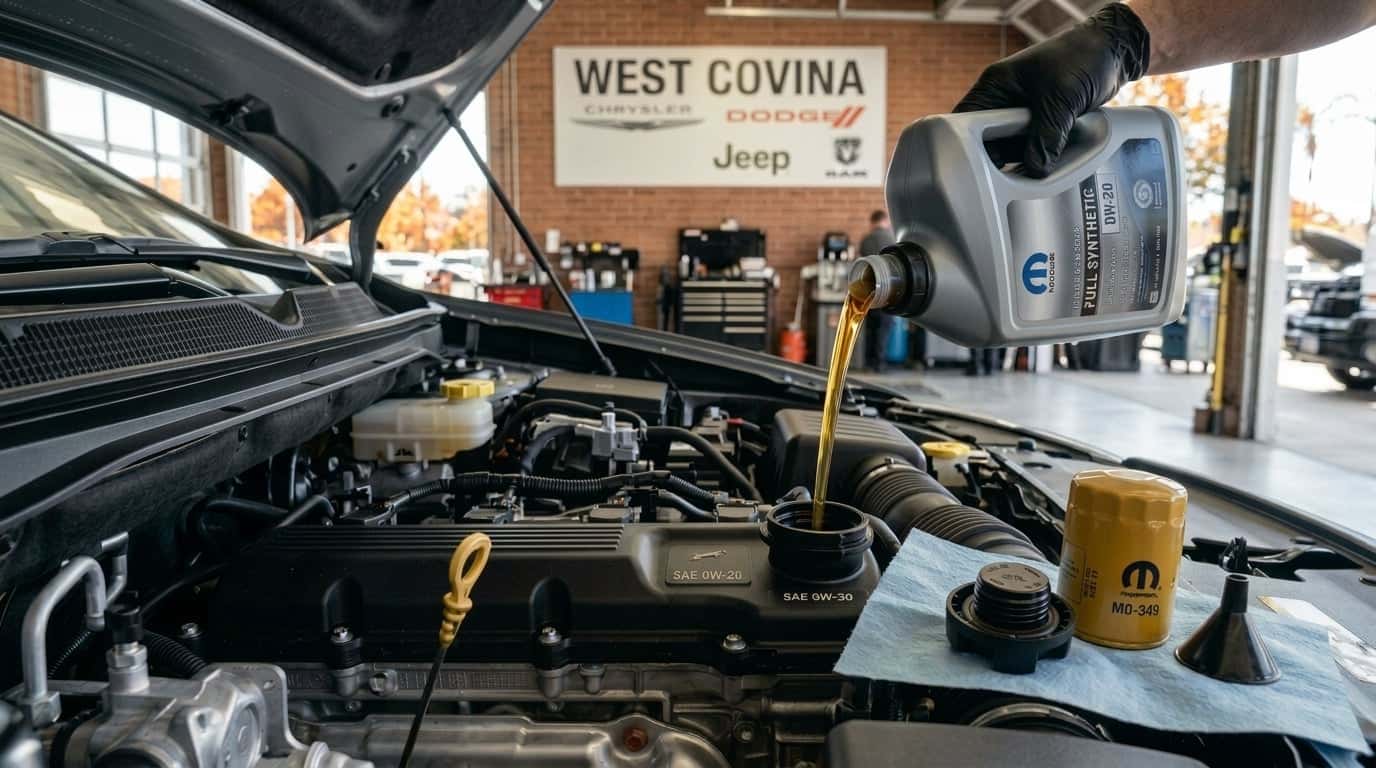
The official Chrysler oil service guidelines specify changing full-synthetic engine oil every 7,500 to 10,000 miles or 12 months under normal operating conditions, using the automatic oil-life monitoring system as the primary maintenance trigger. Under severe driving conditions, such as high-heat commuting or extended idling, maintenance intervals shorten to every 5,000 to 6,000 miles. Every service requires full-synthetic oil meeting Chrysler MS-6395 standards along with an OEM filter.
Modern Chrysler vehicles utilize an onboard Automatic Oil Change Indicator System that calculates oil degradation based on engine operating temperatures, vehicle speed, trip lengths, and engine load. When the system detects that fluid integrity has dropped, a dashboard message alerts the driver that maintenance is due. This prompt can appear earlier than the maximum 10,000-mile ceiling, especially for drivers who frequently experience severe duty conditions.
Severe duty is defined by regular stop-and-go driving, short trips where the engine does not reach full operating temperature, continuous high ambient heat, towing heavy loads, or navigating dusty environments. For commuters traveling along congested corridors around City Of Industry, daily stop-and-go traffic on the 60 and 605 freeways falls under these severe criteria. The extended idling and elevated thermal cycles in these conditions accelerate fluid breakdown, making a 5,000-to-6,000-mile routine necessary to keep internal components protected.
Following these manufacturer guidelines ensures that critical engine passages stay clear of sludge and heat build-up. Skipping service intervals allows oxidized contaminants to circulate through the engine, accelerating wear on valve trains and bearings. To maintain peak engine efficiency and protect long-term vehicle health, drivers can give our service team a quick call or visit our West Covina location for expert fluid checks.
Table of Contents
- How Often Should You Change Your Chrysler Oil to Protect Your Powertrain Warranty?
- What Type of Engine Oil Does a Chrysler Pacifica or Chrysler 300 V8 Require?
- What Are the Early Warning Signs That Your Chrysler Engine Needs Immediate Oil Service?
- Where Can You Get Authorized Chrysler Oil Change Service in West Covina?
- Common Questions About Chrysler Oil Changes
- Schedule Your Certified Chrysler Oil Service Today
How Often Should You Change Your Chrysler Oil to Protect Your Powertrain Warranty?
To keep your factory powertrain warranty intact, Chrysler mandates changing engine oil at least once every 12 months or 10,000 miles, whichever occurs first, regardless of the percentage remaining on the oil-life monitor. Failing to perform scheduled oil changes within these strict parameters, or failing to keep itemized proof of maintenance, can lead to denied warranty coverage if an engine failure occurs due to lubrication breakdown.
The factory powertrain warranty covers internal engine components such as crankshafts, pistons, timing chains, and cylinder heads. However, coverage relies on proper maintenance. If an engine component fails, warranty adjusters may request maintenance records to verify that fluid changes occurred within factory-specified mileage and time windows. Utilizing certified maintenance facilities or keeping detailed service receipts ensures full protection under factory terms.
Operating conditions in Southern California often require servicing fluid ahead of the maximum 10,000-mile mark. For instance, drivers tackling foothill routes in Claremont subject their engines to continuous uphill loads, generating excess crankcase heat. Over time, heat degrades the chemical additives in engine oil, reducing its ability to neutralize combustion acids and prevent metal-to-metal contact.
Using non-approved oil grades or low-quality aftermarket filters can also compromise warranty claims. Chrysler requires engine oil that explicitly meets the MS-6395 material standard, paired with a filter designed for specific flow and pressure thresholds. Choosing genuine Mopar replacement filters and approved fluids ensures that every oil service aligns with factory standards and preserves full warranty protection.
What Type of Engine Oil Does a Chrysler Pacifica or Chrysler 300 V8 Require?
The 2026 Chrysler Pacifica equipped with the 3.6L Pentastar V6 engine requires full-synthetic SAE 0W-20 engine oil meeting Chrysler MS-6395 standards, taking roughly 5.5 quarts with a filter change. The Chrysler 300 equipped with the 5.7L HEMI V8 engine requires full-synthetic SAE 5W-20 engine oil meeting MS-6395 specifications to maintain proper function of its Multi-Displacement System.
Selecting the exact oil grade specified by the manufacturer is vital because modern Chrysler engines rely on specific fluid viscosities for hydraulic actuation and thermal management:
- 3.6L Pentastar V6: Uses SAE 0W-20 full-synthetic oil to lower internal fluid friction, enhance cold-start flow, and keep variable valve timing components operating smoothly.
- 5.7L HEMI V8: Uses SAE 5W-20 full-synthetic oil to maintain correct oil pressure for the Multi-Displacement System, which deactivates four cylinders during highway cruising to optimize efficiency.
Using an unapproved oil weight in the 5.7L HEMI V8 can disable cylinder deactivation or cause sluggish valve engagement, leading to rough running and check engine lights. Similarly, using non-synthetic options in the 3.6L Pentastar V6 can lead to thermal breakdown in high-heat conditions, increasing internal engine varnish.
When Pacifica owners ask our service advisors about oil specs during a routine checkup, they often wonder why SAE 0W-20 full-synthetic is mandatory rather than optional. The answer lies in tighter manufacturing tolerances in contemporary engines, where low-viscosity synthetic fluid must flow instantly through narrow oil passages to protect variable valve timing mechanisms from the moment the ignition turns.
What Are the Early Warning Signs That Your Chrysler Engine Needs Immediate Oil Service?
Early warning signs that a Chrysler engine requires immediate oil service include an illuminated oil pressure warning light, metallic ticking or knocking noises from the engine bay, a distinct burning oil odor, and dark, sludgy fluid on the dipstick. Ignoring these early warning indicators can transform routine maintenance needs into severe, irreversible internal engine damage.
Recognizing specific warning signals helps prevent unexpected mechanical failures:
- Oil Pressure Warning Light: A glowing dashboard oil can icon indicates that oil pressure has dropped below safe operational thresholds.
- Audible Valve Ticking or Tappet Knock: Low fluid levels or degraded oil pressure prevent hydraulic lifters from fully pumping up, creating a rapid metallic ticking sound.
- Burning Fluid Odor: Heated oil leaking onto hot exhaust manifolds or burning inside combustion chambers produces a sharp, acrid smell inside the cabin.
- Dark, Contaminated Fluid: Clean synthetic oil displays an amber color; thick, black, or gritty oil on the dipstick indicates heavy carbon saturation and fluid breakdown.
A low oil level warning light typically indicates that fluid volume inside the oil pan has fallen below the minimum fill line, whereas a low oil pressure light indicates a critical mechanical issue. Low pressure can stem from an exhausted oil pump, a clogged oil filter, or severe fluid breakdown.
If the oil pressure indicator illuminates while driving, safely pull over immediately and turn off the engine. Allow the vehicle to sit for five minutes before checking the dipstick level. If the fluid level is correct but the light remains lit upon restarting, turn off the ignition and avoid driving. You can easily protect your engine by scheduling a service appointment online to have our factory-trained technicians inspect the oil system.
Where Can You Get Authorized Chrysler Oil Change Service in West Covina?
Authorized Chrysler oil change service is available directly at West Covina Chrysler Dodge Jeep Ram | Pinnacle Auto Group, located at 298 N Azusa Ave. Our dedicated service facility features factory-trained, Mopar-certified technicians who understand the specific maintenance requirements of the Chrysler Pacifica, Chrysler 300, and the entire Stellantis vehicle lineup.
Choosing an authorized dealer service center provides distinct technical advantages over generic fast-lube outlets:
- Mopar-Certified Technicians: Service performed by factory-trained specialists who regularly work on Chrysler powertrains.
- Genuine OEM Parts: Complete fluid services utilizing MS-6395 certified full-synthetic oil and factory Mopar oil filters.
- Comprehensive Inspections: Every oil change includes a multi-point inspection checking brake wear, fluid levels, battery health, and tire condition.
- Mopar Express Lane: Dedicated service bays designed to perform fast drop-in routine maintenance without sacrificing factory standards.
Independent quick-lube shops frequently stock universal bulk oils that may not strictly comply with Chrysler MS-6395 requirements. Additionally, non-certified technicians may improperly torque drain plugs or oil filter caps, risking stripped threads or oil leaks.
Our service department utilizes specialized Mopar tools, accurate torque specifications, and factory diagnostic computers to ensure every vehicle leaves operating at peak performance. From simple oil and filter changes to routine maintenance schedules, our team delivers complete ownership care focused on long-term vehicle reliability.
Common Questions About Chrysler Oil Changes
Q: Does the Chrysler oil-life monitoring system reset automatically after an oil change?
No, the oil-life monitoring system must be manually reset by a technician or driver after completing an oil service. To reset the system manually, turn the ignition switch to the ON position without starting the engine, fully depress the accelerator pedal slowly three times within ten seconds, and turn the ignition back OFF. On newer models equipped with digital driver information displays, the system can also be reset directly through the steering wheel control settings menu under the vehicle maintenance screen.
Q: How does severe Southern California weather affect Chrysler synthetic oil performance?
Extreme summer heat rapidly increases engine operating temperatures, accelerating thermal oxidation and evaporation losses within motor oil. While conventional motor oils break down quickly in high temperatures, full-synthetic oils meeting Chrysler MS-6395 standards retain their viscosity structure and lubricating film strength up to extreme operational thresholds. This thermal stability prevents sludge formation, protects tight engine tolerances during prolonged idling, and ensures proper lubrication during heavy highway commutes.
Q: What happens if an improper oil viscosity is used in a Chrysler 5.7L HEMI V8 engine?
Using an unapproved oil weight in a 5.7L HEMI V8 engine disrupts the hydraulic pressure needed to actuate the Multi-Displacement System. The system relies on precise oil pressure signals to engage and disengage cylinder solenoids smoothly. Installing heavier or lighter oils can delay cylinder deactivation, result in loud valvetrain noise, reduce overall fuel economy, and cause the engine control module to trigger diagnostic trouble codes related to variable valve timing.
Q: Are Mopar oil filters significantly different from standard aftermarket filters?
Mopar oil filters are designed specifically for Stellantis engine architectures, featuring exact bypass valve pressure ratings, anti-drainback valves, and filter media density tailored to factory fluid flow requirements. Aftermarket filters often use generic bypass settings that may open prematurely, allowing unfiltered fluid to recirculate through the engine. Mopar filters maintain consistent oil pressure and trap smaller microscopic contaminants, preventing premature wear on internal bearings and camshafts.
Q: Can synthetic blend oil be used instead of full-synthetic in modern Chrysler engines?
Chrysler factory specifications require full-synthetic engine oil meeting MS-6395 standards for modern engines like the 3.6L Pentastar V6. Synthetic blends do not offer the same chemical purity, shear resistance, or thermal protection required to satisfy the extended 10,000-mile service ceiling. Using a synthetic blend or conventional motor oil can lead to accelerated fluid degradation, increased internal engine deposits, and potential warranty complications during a powertrain claim evaluation.
Schedule Your Certified Chrysler Oil Service Today
Maintaining your vehicle with regular full-synthetic oil changes is the single most effective way to extend engine life, preserve fuel economy, and protect factory warranty coverage. Whether you drive a family Pacifica minivan or a performance sedan, using factory-approved synthetic oil and genuine Mopar filters keeps your powertrain operating smoothly mile after mile.
When your oil-life monitor indicates service is due, trust our factory-certified team to provide quick, professional maintenance tailored to your vehicle’s exact engineering standards. Reach out to our team at (626) 746-3132 or visit our service center in West Covina today to complete your routine maintenance.
© 2026 West Covina Chrysler Dodge Jeep Ram | Pinnacle Auto Group. All rights reserved.

0 comment(s) so far on What Are the Official Oil Service Guidelines for Chrysler Vehicles?