





How Often Does a 2026 Chrysler Need Brake Service?
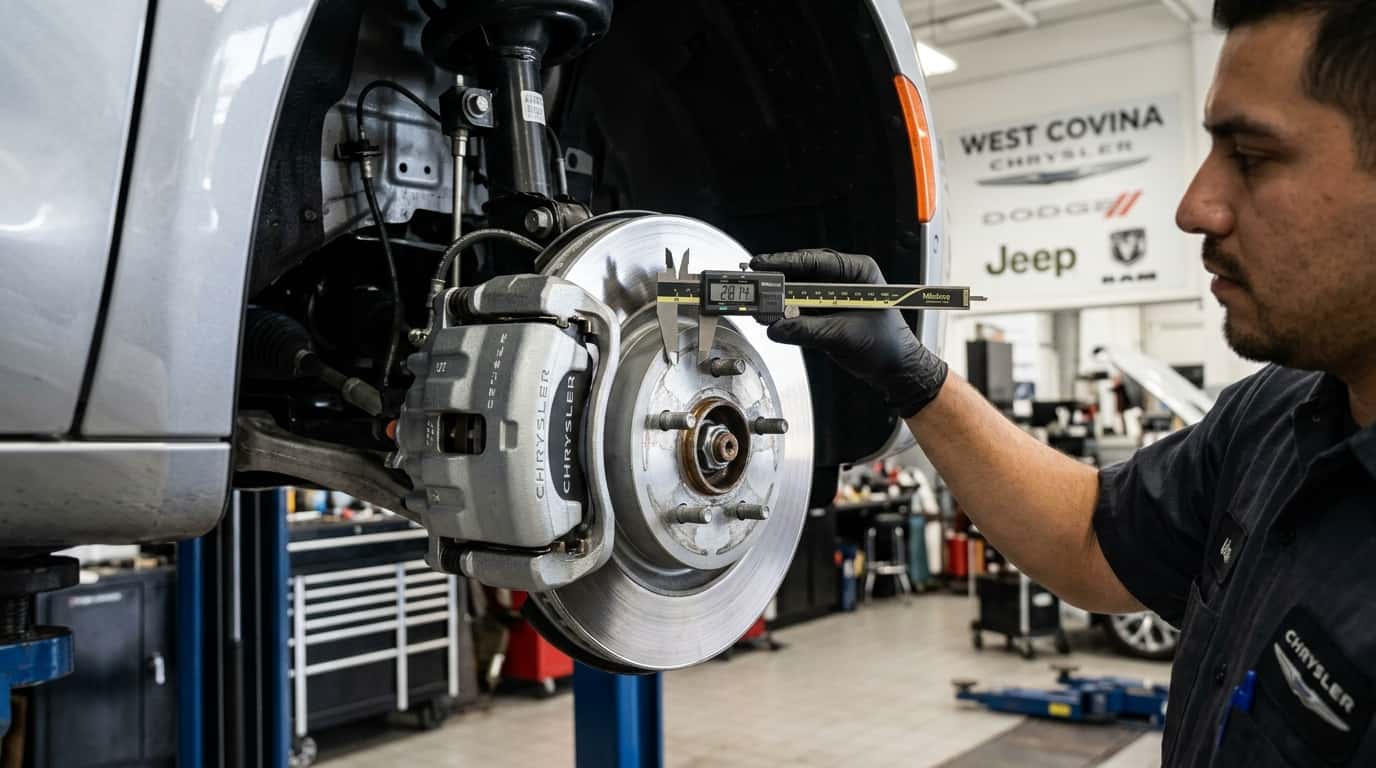
A 2026 Chrysler requires a complete brake-system inspection every 6 months or 6,000 miles, whichever comes first, while hydraulic brake fluid should be flushed and replaced every two years. Friction components like brake pads and rotors do not follow a fixed mileage calendar; instead, technicians evaluate friction thickness during routine inspections to determine replacement needs based on individual vehicle usage and driver habits.
Routine brake inspections for a 2026 Chrysler Pacifica cover the entire braking system to ensure complete system integrity. Certified technicians measure front and rear pad lining thickness, evaluate rotor surface condition for warping or scoring, inspect caliper pistons and slide pins, examine hydraulic lines and hoses for cracks or fluid leaks, and check parking brake engagement. Regular inspections catch wear before metal-to-metal contact occurs, protecting costly calipers and maintaining short stopping distances.
Several real-world indicators signal that a Chrysler needs immediate brake attention outside of scheduled service intervals:
- High-pitched squealing or harsh metallic grinding noises when pressing the pedal
- Spongy, soft, or sinking brake pedal feel during application
- Steering wheel pulsation or pedal vibration under moderate to heavy braking
- Vehicle pulling to one side when slowing down
- Illuminated red brake warning light or ABS alert on the driver display instrument cluster
- Increased stopping distances during normal suburban commuting
Driver habits and local travel conditions directly dictate how quickly brake friction components wear down. Minivans carrying full passenger loads or heavy cargo place greater kinetic stress on front brake assemblies, requiring earlier pad replacement than lightly loaded vehicles. If you suspect your vehicle requires friction replacement or fluid maintenance, visit our West Covina service location at 298 N Azusa Ave or get in touch by calling our team for expert diagnostic care.
Table of Contents
- Why Do Dealership Brake Repair Costs Differ From Independent Shops?
- Should You Choose OEM Mopar Brake Parts or Aftermarket Parts?
- What Causes a Chrysler Brake Pedal to Feel Spongy?
- Do Hybrid Chrysler Pacifica Brake Pads Last Longer Than Gas Model Pads?
- Where to Get Certified Chrysler Brake Service in West Covina
- Common Questions About Chrysler Brake Repairs
- Schedule Your Chrysler Brake Maintenance in West Covina
Why Do Dealership Brake Repair Costs Differ From Independent Shops?
Dealership brake repair pricing reflects the use of exact-fit OEM Mopar brake parts, factory-trained technicians specialized exclusively in Chrysler vehicle architecture, precise diagnostic equipment, and direct manufacturer warranty backing. Independent repair facilities often charge lower baseline rates by utilizing universal aftermarket components, generalized labor, and non-specialized tooling that may require compromises in component fitment or acoustic performance.
Factory-certified technicians complete rigorous Chrysler training programs and understand exact torque specifications, caliper hardware tolerances, and electronic parking brake service modes. When servicing advanced braking systems on modern minivans, proper service procedures require dedicated scan tools to retract electronic rear park brake actuators safely before pad replacement. General repair shops lacking specialized diagnostic equipment risk damaging electronic brake modules, leading to secondary repair costs.
The hardware utilized during service creates another distinct difference in overall service value:
- Genuine Mopar friction materials utilize model-specific ceramic or semi-metallic formulations designed to match factory pedal feel and noise specifications.
- Original equipment rotors feature precise metallurgy, thermal dissipation channels, and factory balancing to prevent premature vibration.
- Service packages at certified centers include full hardware replacement, slider lubrication, hub surface cleaning, and system bleeding.
- Factory service guarantees cover both replacement parts and labor across nationwide dealer networks.
For commuters traveling through dense industrial corridors in City Of Industry where heavy logistics traffic leads to constant stop-and-go braking, certified service ensures maximum stopping consistency and component durability. Booking through our online service scheduling tool provides transparent estimate details and direct access to factory-trained technicians who keep your family vehicle operating to exact safety standards.
Should You Choose OEM Mopar Brake Parts or Aftermarket Parts?
Choosing OEM Mopar brake parts ensures your Chrysler receives components engineered specifically for its exact curb weight, hydraulic pressure specifications, and anti-lock braking algorithms. Aftermarket brake pads and rotors rely on generalized designs built to fit multiple vehicle makes, which frequently results in increased brake dust, uneven wear patterns, unwanted pedal squeal, or altered stopping feel.
Original equipment Mopar friction pads undergo extensive testing to validate stopping power, thermal resistance, and acoustic control. Mopar friction formulations incorporate specialized shim backings and slot designs that absorb high-frequency vibrations, eliminating the high-pitched squeak common with aftermarket ceramic pads. Furthermore, factory brake rotors match the original casting dimensions, flange thickness, and ventilation vane geometry needed to shed heat effectively during heavy braking maneuvers.
A key benefit of factory components is warranty coverage. Genuine Mopar brake pads and mechanical components installed at an authorized service center carry a 24-month/unlimited-mile limited warranty covering both parts and labor. Most aftermarket parts carry limited manufacturer-only warranties that exclude labor costs if a replacement component fails prematurely.
Using authentic components preserves engineered vehicle safety parameters, including automatic emergency braking and adaptive cruise control integration. Buying components directly through our genuine Mopar parts department guarantees factory quality, long-term durability, and exact alignment with Chrysler engineering standards.
What Causes a Chrysler Brake Pedal to Feel Spongy?
A spongy or soft brake pedal feeling in a Chrysler is caused by air trapped inside the hydraulic fluid lines, degraded brake fluid that has absorbed atmospheric moisture, or an internal hydraulic pressure drop within the master cylinder or brake calipers. Hydraulic brake systems rely on incompressible liquid to transfer force from the pedal to the brake pads, so any compressible air bubbles or fluid degradation compromises immediate stopping response.
Over time, glycol-based brake fluid naturally absorbs humidity through microscopic pores in flexible rubber brake hoses. This moisture lowers the boiling point of the fluid. Under hard braking conditions, such as repeated stops or long downhill descents, water within contaminated fluid boils into vapor. Because gas compresses under pressure while liquid does not, stepping on the brake pedal compresses the vapor bubbles first, resulting in a soft, low, or sinking pedal feel.
Resolving a spongy pedal requires specific mechanical intervention depending on the root issue:
- System Bleed & Flush: Purges air bubbles and replaces old, moisture-laden fluid with fresh DOT-approved brake fluid.
- Hose Replacement: Replaces soft, age-deteriorated, or expanding rubber hydraulic lines that swell under pressure.
- Master Cylinder Repair: Replaces internal piston seals when fluid bypasses internal pressure chambers.
- Caliper Servicing: Rebuilds or replaces leaking caliper seals or sticking pistons.
Addressing hydraulic pedal issues promptly prevents complete braking loss and restores firm pedal resistance. Our technicians utilize pressure bleeding systems to purge contaminated fluid entirely, ensuring your hydraulic braking system maintains solid, predictable pedal resistance.
Do Hybrid Chrysler Pacifica Brake Pads Last Longer Than Gas Model Pads?
Brake pads on the 2026 Chrysler Pacifica Hybrid routinely outlast pads on purely gas-powered minivans because the vehicle utilizes regenerative braking for daily deceleration. When the driver applies the brake pedal, the hybrid system engages the electric drive motors as generators, converting the vehicle’s kinetic energy into electrical energy stored in the high-voltage battery pack while slowing the vehicle down smoothy.
Because electric motor resistance handles light to moderate deceleration, the traditional mechanical disc brakes engage primarily during hard, emergency stops or when coming to a complete halt below low speeds. This drastically reduces thermal stress, mechanical friction, and friction material wear on front and rear brake pads. As a result, hybrid brake pads can last up to twice as long as conventional pads under similar driving conditions.
However, reduced pad usage introduces distinct maintenance considerations that require regular inspection:
- Lack of regular pad friction can allow surface rust and corrosion to accumulate on iron brake rotors, particularly in damp environments.
- Caliper slide pins and pad retention clips can seize due to road grime accumulation if not cleaned and lubricated periodically.
- Hydraulic brake fluid degrades at the same time-based rate as non-hybrid vehicles and still requires replacement every two years.
For drivers navigating foothill roads around Claremont, the combination of regenerative retardation and mechanical disc braking provides exceptional stopping control while preserving mechanical pad thickness. Regular inspections ensure that mechanical components remain clean, lubricated, and ready for emergency stops.
Where to Get Certified Chrysler Brake Service in West Covina
Official Chrysler brake service in West Covina, California is available at West Covina Chrysler Dodge Jeep Ram | Pinnacle Auto Group. Located conveniently at 298 N Azusa Ave, our modern service facility features dedicated specialized tools, alignment racks, and factory-trained technicians who specialize in Chrysler passenger vehicles and minivans.
When you bring your vehicle to our service department, our certified technicians execute a thorough multi-point brake inspection using factory standards. We measure pad wear with precision tools, check rotor runout to prevent brake pedal pulsation, inspect all hydraulic fittings, and test brake fluid moisture content. Every service utilizes authentic OEM Mopar replacement parts designed specifically for your vehicle model year.
Our service center provides a comfortable customer lounge with fast Wi-Fi, streamlined check-in procedures, and transparent service reporting. Whether you need routine 6,000-mile maintenance or a complete hydraulic flush, our facility delivers professional care focused on vehicle reliability and safety.
Common Questions About Chrysler Brake Repairs
Q: How do I know if my Chrysler brake pads need to be replaced?
You can identify worn Chrysler brake pads by listening for a high-pitched metallic squeal produced by the built-in wear indicators when stopping. Other common signs include harsh grinding noises, a soft brake pedal, vibration through the steering wheel, or an increased stopping distance. During routine 6,000-mile service inspections, certified technicians measure pad thickness; replacement is typically recommended when friction lining wears down to 3 millimeters or less.
Q: Do OEM Mopar brake parts come with a warranty?
Yes, genuine OEM Mopar brake pads, rotors, and mechanical components installed by an authorized dealership service center come backed by a 24-month/unlimited-mile limited warranty. This factory warranty covers both replacement parts and repair labor if a component exhibits material defects or premature failure under normal operating conditions, providing peace of mind that aftermarket alternatives cannot match.
Q: How often should Chrysler brake fluid be flushed?
Chrysler service guidelines recommend flushing and replacing hydraulic brake fluid every two years regardless of accumulated vehicle mileage. Glycol brake fluid absorbs moisture over time, lowering its boiling point and causing internal corrosion within calipers and master cylinders. Regular two-year flushes prevent spongy pedal feel, protect sensitive anti-lock brake valving, and preserve optimal stopping power.
Q: Do I need an appointment for a brake inspection in West Covina?
While our dealership handles quick routine checks through Express Lane service when available, scheduling a service appointment online or by phone is highly recommended for detailed brake diagnostics, pad replacement, or fluid flushes. Booking an appointment reserves a dedicated bay and certified technician, minimizing your wait time and ensuring complete service delivery.
Q: What is involved in a complete Chrysler brake inspection?
A comprehensive Chrysler brake inspection covers every friction and hydraulic component in the braking system. Technicians measure front and rear pad lining thickness, inspect rotors for surface scoring or thermal warping, check caliper slide movement and rubber boots, examine flexible hydraulic lines for cracks or leaks, test fluid moisture levels, and verify proper parking brake adjustment and electronic actuator function.
Schedule Your Chrysler Brake Maintenance in West Covina
Maintaining your vehicle’s braking system is vital for keeping your family safe on the road. From routine pad thickness checks and rotor resurfacing to complete two-year hydraulic fluid flushes, timely maintenance protects your vehicle’s long-term performance and resale value. Certified care ensures every component matches factory stopping specifications.
Our factory-trained technicians at West Covina Chrysler Dodge Jeep Ram | Pinnacle Auto Group stand ready to provide specialized care for your 2026 Chrysler Pacifica or Pacifica Hybrid. We utilize authentic OEM Mopar components, specialized diagnostic tools, and factory service protocols to keep your vehicle performing reliably.
Take the next step in protecting your vehicle’s braking safety today. Find our dealership address and directions online or speak directly with a service advisor by (626) 746-3132 to schedule your upcoming brake inspection.
© 2026 West Covina Chrysler Dodge Jeep Ram | Pinnacle Auto Group. All rights reserved.

0 comment(s) so far on How Often Does a 2026 Chrysler Need Brake Service?